Best ChatGPT Alternatives & Top Chatbots in 2026 (Tested)
 By Rajesh Cherukuri, founder of Mnemosphere AI
While ChatGPT remains the default face of AI, locking yourself into a single model is a massive productivity bottle-neck. The LLM landscape has highly fragmented in 2026. Different models have developed unique, specialized advantages in reasoning, web-indexing, writing, and real-time social data. We thoroughly tested the 5 leading ChatGPT alternatives on real-world knowledge workflows. Inside, we break down their actual strengths, hidden trade-offs, and why the ultimate "alternative" isn't switching to another single chatbot—but shifting to a multi-model workspace.
TL;DR — The 30-second summary
If you are short on time, here is the quick verdict from our multi-month evaluation:
- ▸Claude is the best for reasoning and long documents. If your work involves heavy document review, highly nuanced long-form writing, or deep strategic planning, Claude remains the strongest standalone chatbot.
- ▸Gemini leads on context size and Google integration. With a context window of over a million tokens and direct web-grounding, Gemini is the master of digesting hours of video, audio, or hundreds of pages of files.
- ▸Perplexity is the king of structured web Q&A. For quick fact-finding where you need reliable, clickable source citations, Perplexity leaves traditional conversational AI in the dust.
- ▸Grok is the master of real-time social sentiment. Powered by live X (Twitter) datasets, Grok tracks breaking news, public sentiment, and tech trends hours before other search-engines index them.
- ▸Mnemosphere AI is the ultimate alternative. Why compromise or pay for four different subscriptions? Mnemosphere AI acts as a multi-model workspace, allowing you to run Claude, Gemini, Grok, and GPT side-by-side on a single screen, critique their answers, and synthesize them in real-time.
Quick Comparison Table
Here is how the top five alternatives stack up against ChatGPT across core capabilities:
| Alternative | Best For | Standout Strength | Starting Price |
|---|---|---|---|
| Mnemosphere AI | All-in-one Multi-Model Workspace | Run Claude, Gemini, Grok, and GPT in parallel side-by-side | $25/mo |
| Claude (Anthropic) | Nuanced Writing & Strategic Logic | Deep reasoning, highly human-like style | Free / $20/mo |
| Gemini (Google) | Massive File/Video Analysis | 1M+ context window, Workspace connection | Free / $19.99/mo |
| Perplexity | Fact-Checking & Cited Research | Inline clickable web citations, Pro Search | Free / $20/mo |
| Grok (xAI) | Real-Time Trends & Fewer Guardrails | X database integration, opinionated depth | $8/mo - $40/mo |
The Best ChatGPT Alternatives
We tested dozens of apps, sorting them by reliability, user experience, and intelligence. These are the five alternatives that consistently earned their place in a modern professional workflow.
Mnemosphere AI
Editor's pickWhy lock yourself into one chatbot? Use them all, in parallel, inside a unified thinking environment.

The Platform Built for Serious Work
Mnemosphere AI isn't just another wrapped interface. It is an orchestration workspace designed to eliminate the single-model bias that leads to confident hallucinations. By allowing you to run every major LLM on a single prompt, you get a 360-degree synthesis of an answer.
Through native features like Parallel Prompts, Thread Notes, and 1-click Mindmaps, Mnemosphere AI moves your workflow from simple "chatbot Q&A" to rigorous knowledge synthesis.
Strengths
- ✓Run GPT, Claude, Gemini, and Grok side-by-side in real-time
- ✓1-click Critique pass: automatically spot model blind spots and bias
- ✓Parallel prompts: execute up to 5 distinct tasks simultaneously
- ✓Thread Notes: highlight and capture insights with inline source links
- ✓1-click Mindmap: turn complex text responses into visual charts
- ✓Thread Index: auto-indexes long research threads for easy navigation
- ✓Unified subscription saves up to $55/month in aggregate billing
Weaknesses
- ✗More powerful than casual users require for simple 1-sentence questions
- ✗Advanced multi-model features require a brief learning curve
Pricing
$25/mo
Ideal users
Founders, consultants, financial analysts, policy researchers, power users.
Real workflow
You are drafting a complex business strategy: send the query to Claude, Gemini, and GPT in parallel. Let Gemini pull the latest data, Claude outline the structure, and GPT summarize. Run a critique pass to check for logical leaps, highlight key insights directly into Thread Notes, and export a beautiful, multi-model PDF report.
Claude (Anthropic)
The writer's favorite. Unparalleled reasoning depth and strategic logical analysis.
Anthropic's Claude has earned a cult-like following among professionals who value intellectual precision over raw speed. While ChatGPT can sometimes feel eager to please—often leading to generic or sycophantic replies—Claude is famously willing to disagree with the user, point out structural flaws in your prompts, and maintain an incredibly cohesive tone across long documents.
Strengths
- ✓A highly natural, engaging, and less robotic writing style
- ✓Massive 200K token context window built for heavy files
- ✓Superior logical reasoning and complex multi-step analysis
- ✓Nuanced uncertainty: will state what it doesn't know instead of guessing
Weaknesses
- ✗No native, search-engine-grounded web browsing on the standard chat
- ✗Relatively strict usage limits on the Pro subscription during peak hours
- ✗Slower generation speed compared to ultra-fast models
Pricing
Free tier / $20/mo (Claude Pro)
Ideal users
Strategy consultants, copywriters, legal professionals, senior engineers.
Real workflow
Upload a 60-page regulatory report and ask Claude to draft a policy memo pointing out potential compliance bottlenecks for an e-commerce business. Claude returns a nuanced, context-aware analysis with clean, professional prose.
Gemini (Google)
The file-processing powerhouse. Massive context windows and native Google integration.
Google's Gemini excels at scale. No other tool on the market can ingest a million tokens of data—equivalent to over 700,000 words—and allow you to search through it dynamically. If your daily work involves combing through massive video recordings, raw audio briefings, or complete books of technical documentation, Gemini is an indispensable asset.
Strengths
- ✓Incredible 1M+ token context window on Advanced models
- ✓Direct integration with Google Search for real-time web grounding
- ✓Tightly integrated with Google Workspace (Docs, Drive, Gmail)
- ✓Exceptional multimodal performance (translating raw video/audio inputs)
Weaknesses
- ✗Strategic reasoning can occasionally lag behind GPT and Claude on niche logic puzzles
- ✗Output formatting is occasionally prone to heavy bullet-points over dense analysis
- ✗Safety guardrails are highly conservative and can trigger false-refusals
Pricing
Free tier / $19.99/mo (Google One AI Premium)
Ideal users
Market researchers, academics, students, heavy Google Workspace users.
Real workflow
Drop a 2-hour video of an industry conference panel directly into Gemini. Ask it to extract key quotes, outline the main market disagreements, and format it as a Google Doc in your Drive in under 30 seconds.
Perplexity
The answer engine. Every single sentence backed by a verifiable clickable citation.
Perplexity has redefined web search. Instead of throwing you a list of links, it acts as an agentic researcher. It writes queries, executes search loops, reads the contents of the top 10+ pages, and writes a synthesized report with inline footnotes. It is the single fastest way to verify factual questions in real-time.
Strengths
- ✓Inline clickable citations linked directly to verified sources
- ✓Pro Search automatically breaks down broad prompts into sequential web queries
- ✓Selectable model backends (including Claude 3.5 Sonnet and GPT-4o)
- ✓Clean visual cards summarizing web source collections
Weaknesses
- ✗Not designed as a creative or long-form writing partner
- ✗Struggles with persistent, multi-turn logical thinking in a single thread
- ✗Source credibility varies; still requires human validation
Pricing
Free tier / $20/mo (Perplexity Pro)
Ideal users
Journalists, research analysts, investment bankers, students.
Real workflow
You need to quickly brief your team on a competitor\'s sudden executive departure: ask Perplexity Pro to run a deep search. It queries multiple corporate registries, blogs, and news wires, returning a cited timeline of the event with links to source press releases.
Grok (xAI)
Real-time internet culture. Direct integration with X/Twitter datasets and an unfiltered worldview.
Grok is the spikiest alternative to ChatGPT. By utilizing xAI's direct access to the live X platform, Grok bypasses the delay of traditional search indexers. On tech breakthroughs, trading panics, and culture trends, Grok knows what is happening hours before the rest of the web. It also lacks the overly-cautious, heavily-caveated tone of ChatGPT, giving you raw, direct answers that are perfect for steel-manning arguments.
Strengths
- ✓Direct, exclusive real-time pipeline to the entire X platform database
- ✓Fewer content filters, allowing direct engagement with sensitive or controversial topics
- ✓Willing to take highly clear, opinionated stances rather than heavily hedging
- ✓Strong, pragmatic coding capabilities on recent 4.x models
Weaknesses
- ✗Prone to capturing unverified social media rumor as factual news if not cross-grounded
- ✗The user interface is nested inside the X platform, lacking clean collaboration tooling
- ✗Weaker on formal corporate document formatting
Pricing
Included with X Premium ($8/mo) or Premium+ ($40/mo)
Ideal users
Marketers, crypto/stock traders, social media managers, contrarian thinkers.
Real workflow
An unexpected software vulnerability is announced on tech social media: ask Grok to summarize current reports from security researchers on X, outline the active exploits, and pull raw code snippets showing the patch.
Why Multi-Model is the Real Shift
Moving from ChatGPT to another single chatbot—like paying for Claude Pro instead—just swaps one silo for another.
In 2026, the highest-performing knowledge workers have realized a fundamental truth: no single model wins across all scenarios.
The Single-Model Trap
When you use only one model, you inherit its specific blind spots. ChatGPT has a tendency to confidently hallucinate niche facts. Claude occasionally acts over-conservative and slows down on fast turnarounds. Gemini can flatten structural nuances into simple lists.
If you run a high-stakes strategic prompt on just one model, you are trusting a single viewpoint. But when you run that same prompt across three models in parallel, the discrepancies jump out. The areas where the models agree represent baseline truths. The areas where they diverge show you exactly where you need to investigate.
By utilizing a multi-model workspace like Mnemosphere AI, you get access to Claude, Gemini, Grok, and GPT under a single subscription. This allows you to deploy a highly effective multi-model AI productivity workflow. The platform manages the context, meaning Claude knows what Gemini said, allowing you to run cross-model debates, critique passes, and visual mindmapping seamlessly.
Building Your AI Productivity Stack
To maximize your output, you do not need to juggle fifteen separate tools. You need a simple, zero-overlap stack structured across four distinct layers:
1. Thinking & Reasoning Layer
Where your active drafting, strategy planning, and multi-model comparison happen.
Mnemosphere AI (All Models)
2. Cited Research Layer
Where you go to verify quick factual assertions and crawl specific web pages.
Perplexity
3. Capture & Meeting Layer
Where voice calls, meeting audio, and collaborative team documents live.
Otter.ai + Notion
4. Specialist Domain Layer
Highly targeted tools that earn their place for specific tasks.
Cursor (Code) / Motion (Calendar)
The goal of a modern setup is consolidation through orchestration. By running all major LLMs inside Mnemosphere AI, you eliminate tab-switching, drop cognitive load, and ensure that you always have the absolute best model working on the right task.
Frequently Asked Questions
What is the best alternative to ChatGPT?
The best alternative depends on your task. For long-document analysis and nuanced writing, Anthropic's Claude is the clear winner. For real-time web research, Gemini and Perplexity are superior. For tracking viral social trends and unfiltered debate, Grok leads. However, the ultimate alternative is Mnemosphere AI, which acts as a multi-model orchestrator letting you use Claude, Gemini, Grok, and GPT side-by-side in one interface.
Is there a free ChatGPT alternative that is actually good?
Yes. Claude (by Anthropic) and Gemini (by Google) both offer highly capable free tiers that match or exceed ChatGPT's free tier on reasoning and web integration. Additionally, Perplexity offers free basic searches with direct web citations.
Is Claude better than ChatGPT?
Claude is widely considered better than ChatGPT for long-form creative writing, reading and digesting large documents, and logical reasoning where nuance is critical. ChatGPT still holds a slight edge in raw programming execution, tool plugins, and general voice interactions.
What makes Grok different from ChatGPT?
Grok has real-time access to the X (formerly Twitter) platform, allowing it to capture breaking news and public sentiment hours before traditional search engines index them. It also has fewer content filters and guardrails, allowing it to engage with controversial or sensitive topics more directly than ChatGPT.
Why should I use a multi-model platform like Mnemosphere instead of one AI?
Because no single AI model is best at everything. Claude shines at logical nuance, Gemini at search context, and Grok at live trends. Instead of paying for 4 separate subscriptions and constantly copy-pasting your prompts across tabs, Mnemosphere integrates all of them into a parallel workspace, letting you run a single prompt across all major models, compare, and synthesize the best output.
Stop choosing one AI. Use them all.
Mnemosphere AI is the multi-model AI productivity platform built for knowledge workers. Run GPT, Claude, Gemini, and Grok in parallel. Critique answers in one click. Capture insights inline. Turn long threads into mindmaps. All in one workspace.
Get startedKeep reading
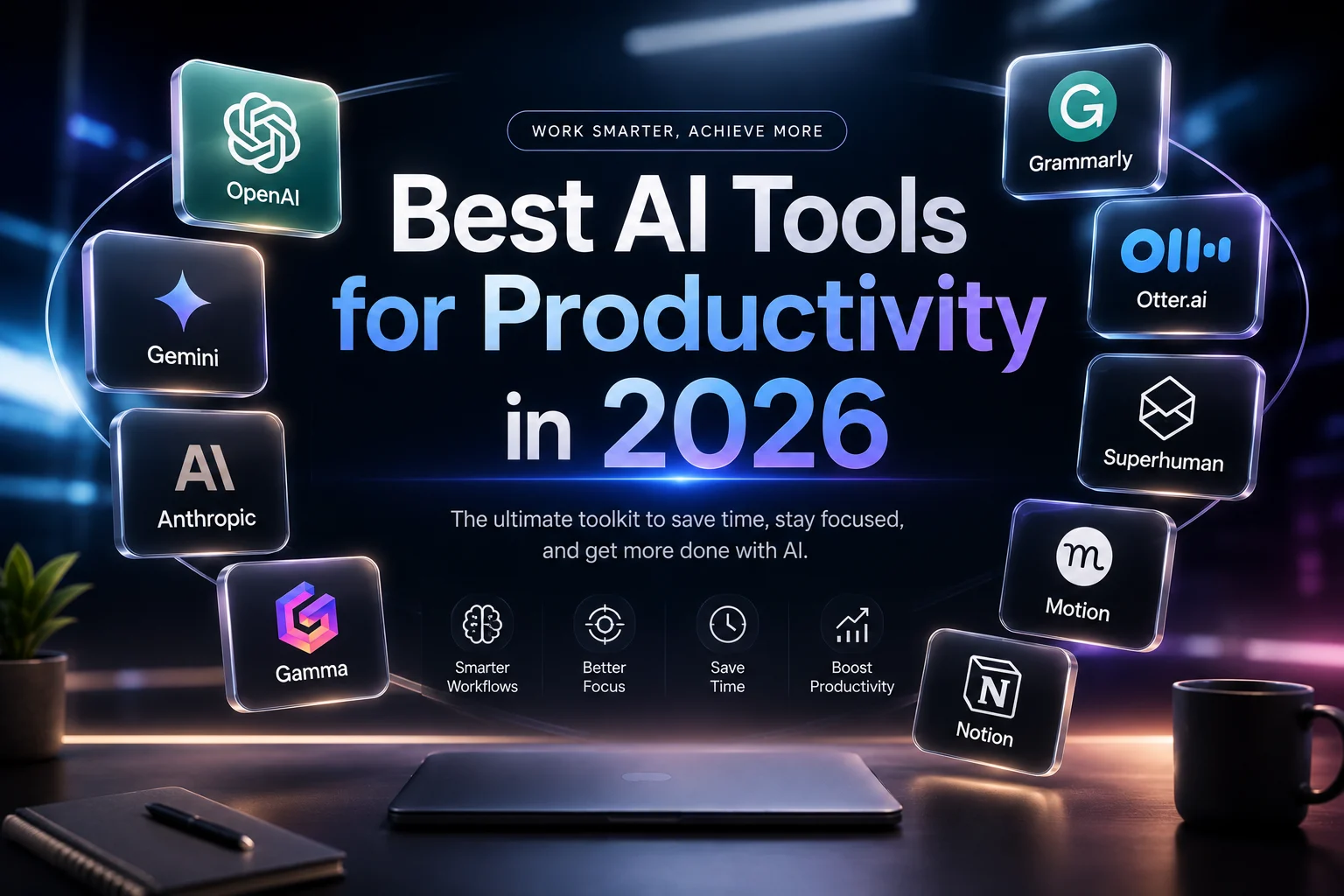
Best AI Tools for Productivity in 2026
We tested 13 AI productivity tools across real workflows. The multi-model stack that beats single-tool setups.
AI ComparisonGrok vs ChatGPT: We Tested Both on 15 Real Tasks
A blind comparison on coding, writing, research, and reasoning. The winner is not what you would expect.